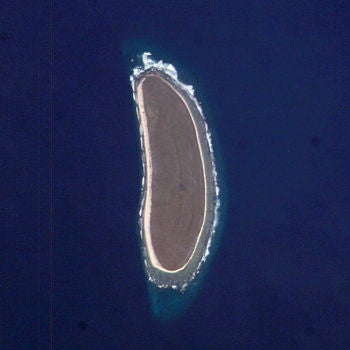
The pristine coral reef ecosystem around Howland Island will be protected as part of the Pacific Remote Islands Marine National Monuments. Photo courtesy NOAA.
No one would ever call President George W. Bush a treehugger, but it seems he has an affinity for the ocean. Yesterday, Bush three areas of the Pacific Ocean as new marine national monuments. The designation will prohibit resource destruction or extraction, waste dumping, and commercial fishing within the combined 195,275 square miles���the largest fully protected marine area in the world.
The monuments include parts of the Marianas Trench, the deepest region of the world���s oceans, active undersea volcanoes and thermal vents, and remote atolls and coral reefs. The tracts support a large number of seabirds and migratory shorebirds, and rare petrel, shearwaters, and terns nest on the remote part of American Samoa included in the Rose Atoll Marine National Monument. Giant clams, endangered turtles, reef sharks, and hundreds of fish species will also benefit.
Bush has been making a lot of environmental headlines of late���of a negative nature���for pushing through that will likely damage wildlife and ecosystems. For anyone who���s skeptical of the new monuments (Bush did, after all, lift a presidential in July), take heart in Joshua Reichert���s words:
���With the designation of the world���s largest marine reserve in the Northwestern Hawaiian Islands in 2006, and now these three other sites, George W. Bush has done more to protect unique areas of the world���s oceans than any other person in history,��� Reichert, managing director of the Pew Environmental Group, The New York Times.
While no one is denying that the designations are important, some environmental groups were more measured in their enthusiasm. Brendan Cummings, the Center for Biological Diversity���s oceans program director, the BBC that "Unless we deal with global warming, all other protective measures for coral reefs will be rendered meaningless."
The oceans are taking a double beating from climate change: global warming is heating up the waterbodies, and rising atmospheric CO2 emissions are gradually increasing the acidity of the ocean, which soaks up the greenhouse gas. Studies have that as the ocean���s pH drops, so does the growth of coral (whose reefs provide nurseries and havens for numerous creatures) and shell-building marine animals, many of which are central to the food chain.
Bush���s designations are an important step, but to protect our oceans it���s also critical that we cut carbon emissions���a task that���s high up on President-elect s list of priorities.


