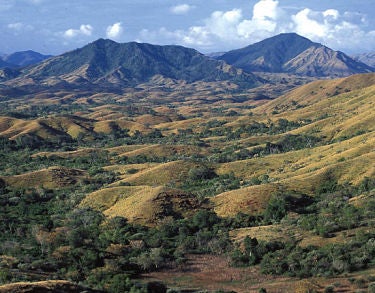
island of Madagascar, the world's highest priority biodiversity hotspot and one of the most extraordinary places in our planet," Mittermeier said in a press release. "It is particularly remarkable that we continue to find new species of lemurs and many other plants and animals in this heavily impacted country, which has already lost 90 percent or more of its original vegetation."
Because its range is restricted, it will probably be declared endangered or critically endangered, according to .
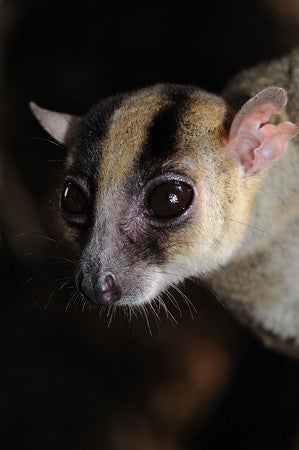
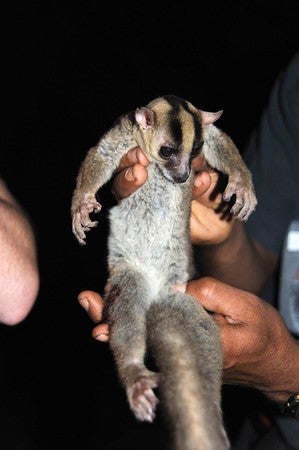
Like the four described species of the genus Phaner, this fork-marked lemur bears a black, Y-shaped line on its head, has large hands and feet for gripping trees, and emits a loud, high-pitched call at night. It uses its long tongue to slurp up nectar, and its specialized teeth for scraping tree gum.
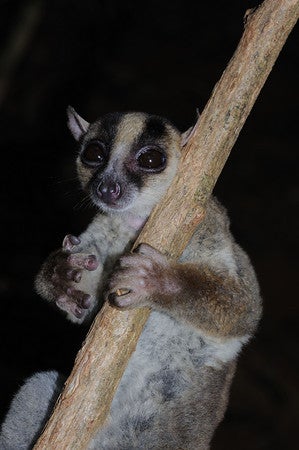
Photo: Conservation International/Russell A. Mittermeier |
Wonder what it's like to track these peculiar primates through Madagascar���s steep, leech-filled rainforests? Former 91做厙 photo editor Kim Hubbard spent two weeks volunteering on a lemur project with Earthwatch. She wrote about her incredible experience for the magazine:
Standing there eyeball to eyeball with the lemur, I was not entirely certain what was going to happen next. He seemed to have come from nowhere, sailing over my head and landing on the tree in front of my face.
We stood transfixed. Slowly he leaned forward and gave me a few curious sniffs, our noses almost touching, before he bounced away through the trees. I was ecstatic.
to continue reading ���For the Love of Lemurs.���