| As ravenous as we are for oil these days, we’ll take it any way we can get it from any place we can get it. Having drained most of the easy reserves, we’re tapping the difficult ones—three and a half miles under the Gulf of Mexico, for instance, and “tar sands� several hundred feet below northern Alberta’s boreal forests.
It’s expensive in all sorts of ways. In Alberta, for example, the entire native ecosystem has to be bulldozed away, the tar sands below strip-mined, and the oil-laced product, “bitumen,� steamed out by vast amounts of gas-heated water in a process that spikes the planet’s carbon load even as it destroys its carbon-sequestering potential. Waste products include hundreds of billions of gallons of toxic goop, plants, wildlife, fish, rivers, and people (see “,� March-April 2010).
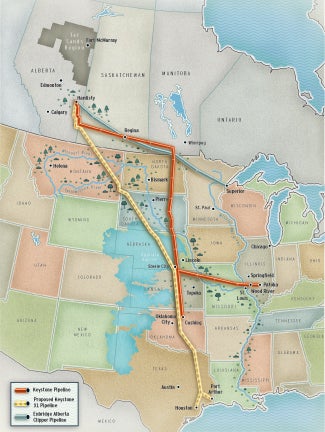
Keystone XL, as TransCanada calls its proposed pipeline, will be 36 inches in diameter and two times longer than the Trans-Alaska Pipeline. In Nebraska’s Sandhills it will be buried inside the largest underground reservoir on the planet—the , which charges rivers, lakes, and marshes and supplies drinking and irrigation water to eight states.
Bitumen is too viscous to be piped, so it is spiked with volatile liquid condensate from natural gas and thus converted to a thinner cocktail called DilBit (short for diluted bitumen) that contains all the toxic and carcinogenic fractions found in regular crude oil. And tar sands oil makes pipeline leaks more likely. DilBit has high concentrations of chloride salts, sulfur, abrasive minerals, and acids, and it needs to be pumped under high pressure. So it is rough on pipes. |