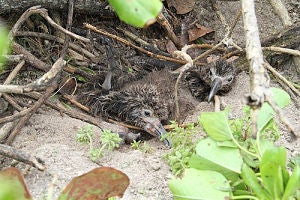
These chicks, buried in sand and vegetation by the tsunami, survived thanks to rescue efforts. Image: FWS Refuge biologist, Pete Leary |
The monster tsunami that swept over Japan almost two weeks ago and killed thousands of people also took the lives of what U.S. Fish and Wildlife officials now estimate to be 110,000 Laysan and black-footed albatross chicks and 2,000 adult birds at Hawaii���s . On a happier note, biologists there yesterday reported that the albatross called Wisdom, often considered the oldest wild bird on record and who had been missing, returned to her nest.
On March 10 and 11, the earthquake-induced tsunami washed over Midway Atoll���s three islands, Sand, Eastern, and Spit Islands, with the highest waves reaching five feet into the air, according to the . Refuge workers, who put initial estimates for lost bird life in the tens of thousands, concentrated first on freeing several hundred animals caught in the debris. Then they surveyed the damage. The tsunami, coupled with two severe winter storms in January and February, killed off approximately 22 percent of this year���s albatross population.
���We are very fortunate not to have suffered any loss of human life or other tragedy, as have the people in Japan, and for that we are very grateful,��� said Barry Stieglitz, Project Leader for the Hawaiian and Pacific
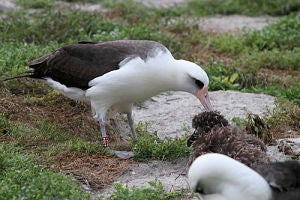
Wisdom, the albatross, preening her chick. Image: FWS Refuge biologist, Pete Leary |
Islands National Wildlife Refuge Complex. ���But this tsunami was indeed a disaster at many levels, including for wildlife.���
Wisdom is a . ���She has��如rovided us valuable information about the longevity of these beautiful birds���in her case over 60 years���and reinforces the importance of breeding adults in the population,��� Stieglitz said. ���It���s also very humbling to know this 8-pound bird has been producing chicks longer than I have been alive.��� According to Pete Leary, Wildlife Biologist at Midway, Wisdom was first tagged as a breeding adult in 1956. To date, she���s raised anywhere from .
For the most up-to-date information about the tsunami���s affect on the region's wildlife, visit the and scroll down to ���Recent News Releases.���


